Salmon vs Tilapia: Nutrition Compared
By Alex Soto on 05/02/2026- Save on Pinterest
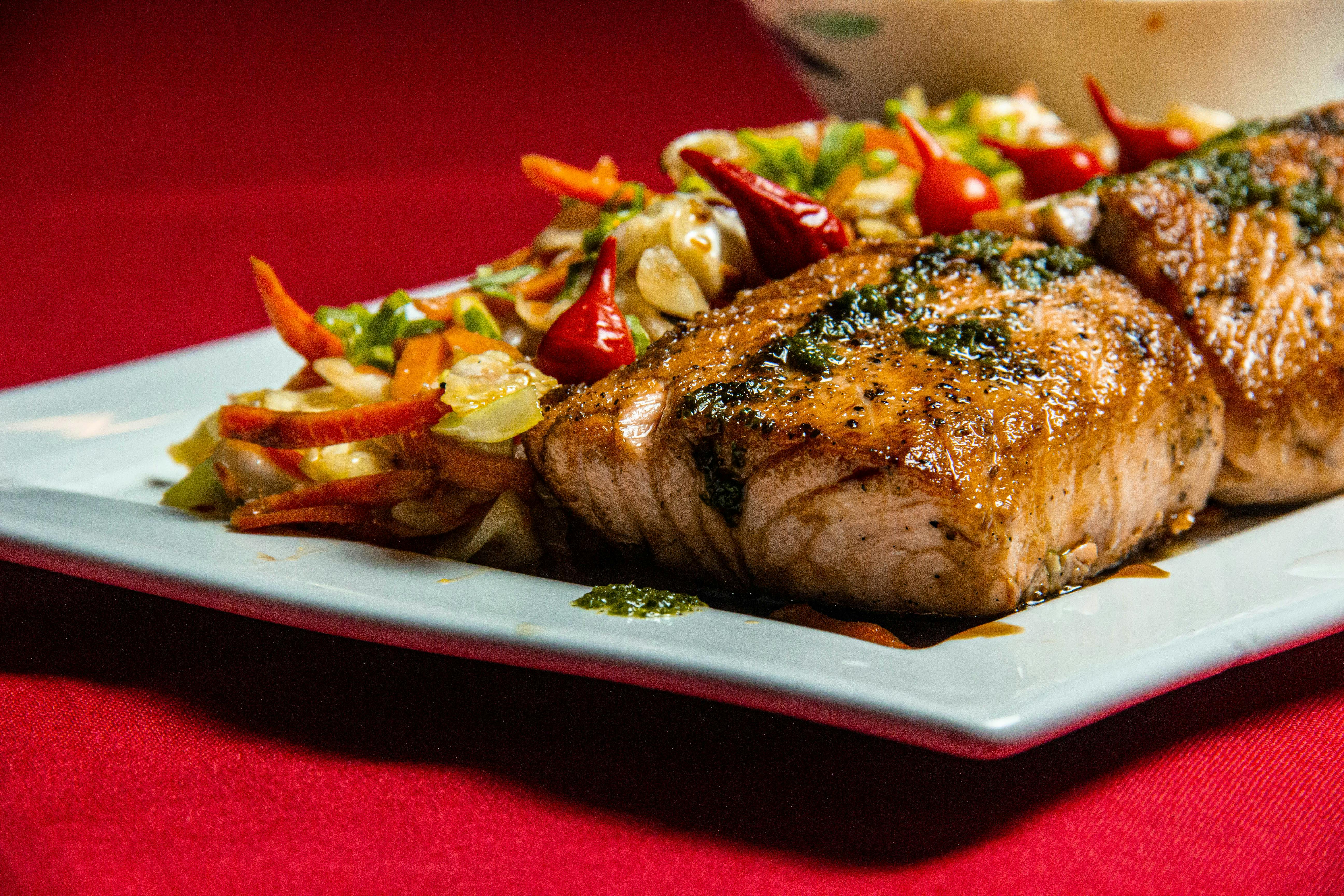 Salmon and tilapia are both widely eaten, affordable, and considered healthy choices — but they represent opposite ends of the fish nutrition spectrum. Salmon is a fatty oily fish packed with omega-3s and calories, while tilapia is one of the leanest white fish available. Understanding the difference helps you choose the right fish for your specific dietary goals.
This is part of our Fish Nutrition Complete Guide. For other comparisons see Salmon vs Tuna and Healthiest Fish for Weight Loss.
Calories: Tilapia Is Significantly Lower
Tilapia contains approximately 128 calories per 100g cooked, compared to around 208 calories for salmon. That is a difference of 80 calories per serving — a significant gap if you are eating fish several times a week. Tilapia's low calorie count makes it one of the best fish choices for anyone in a calorie deficit trying to lose weight.Protein: Tilapia Actually Leads
Despite being much lower in calories, tilapia provides more protein per 100g than salmon — approximately 26g versus 20g. This gives tilapia an exceptional protein-to-calorie ratio, making it one of the most efficient protein sources in the entire fish category. For athletes, bodybuilders, or anyone trying to maximise protein intake while managing calories, tilapia is a standout choice.Fat and Omega-3s: Salmon Wins by a Wide Margin
Salmon contains around 13g of fat per 100g, most of it beneficial unsaturated fat including substantial omega-3 fatty acids. Tilapia contains only around 3g of fat per 100g and is relatively low in omega-3s. This is the key nutritional trade-off between the two fish — tilapia's leanness is an advantage for calorie control but a disadvantage for omega-3 intake.If you eat tilapia regularly as your primary fish, it is worth supplementing omega-3s through other sources such as sardines, mackerel, or a fish oil supplement to ensure adequate EPA and DHA intake.
Vitamins and Minerals
Salmon provides significantly more vitamin D, vitamin B12, potassium, and selenium than tilapia. These are all nutrients where oily fish generally outperform lean white fish. Tilapia still provides meaningful amounts of phosphorus, niacin, and B12, but the overall micronutrient density of salmon is higher.Which Should You Choose?
Choose tilapia if: you are in a calorie deficit, want to maximise protein per calorie, or are on a very low-fat diet.Choose salmon if: omega-3 intake, vitamin D, and overall nutritional density are priorities.
The ideal approach for most people is to include both — tilapia for high-protein, low-calorie meals during the week, and salmon once or twice a week to cover omega-3 and vitamin D needs. Use our Daily Calorie Needs Calculator to work out your daily targets.
| fish | nutrition | healthy foods