This is part of our Fish Nutrition Complete Guide. See also Healthiest Fish for Weight Loss and Fish with the Most Protein.
Calories: Depends on the Fish
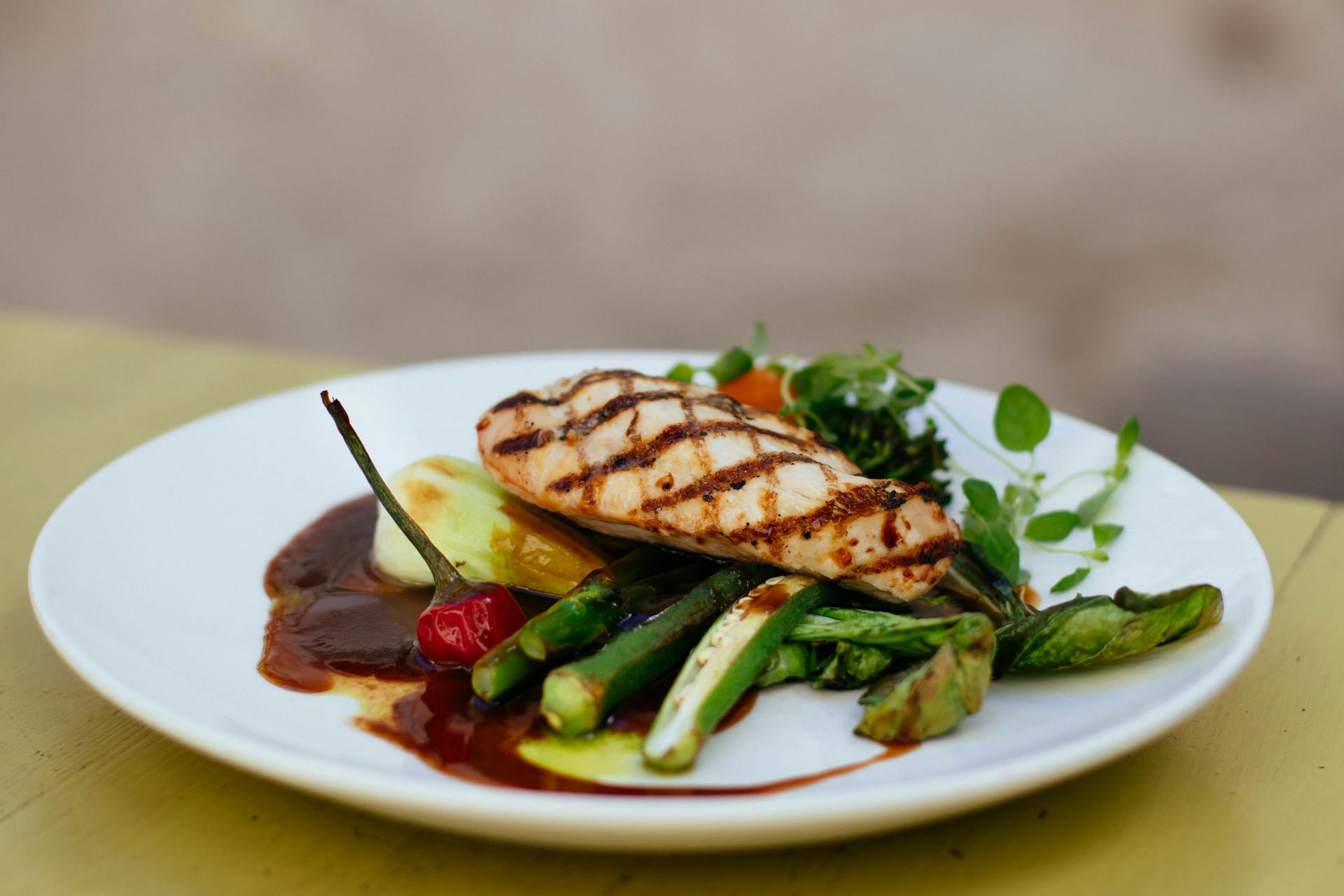
Chicken breast contains approximately 165 calories per 100g cooked — placing it between lean white fish and oily fish on the calorie scale. Lean fish like shrimp (99 cal), cod (105 cal), halibut (111 cal), and tilapia (128 cal) are all lower in calories than chicken. Oily fish like salmon (208 cal) and mackerel (205 cal) are higher.If calorie minimisation is the priority, lean fish beats chicken. If you prefer a consistent calorie count, chicken is more predictable across cuts and preparations.
Protein: Chicken Leads on Raw Protein Content
Chicken breast is one of the highest-protein foods available at around 31g of protein per 100g cooked. Most fish provide 20–26g per 100g — solid but below chicken breast. However on a protein-to-calorie basis, lean fish like shrimp, tilapia, and cod are competitive with or superior to chicken, providing similar protein at fewer calories.Fat and Omega-3s: Fish Wins Clearly for Heart Health
This is the most significant nutritional difference between fish and chicken. Chicken breast is very low in fat at around 3.6g per 100g, almost entirely saturated and monounsaturated. Fish — particularly oily fish — provides substantial amounts of omega-3 fatty acids which chicken essentially does not contain.Salmon, mackerel, sardines, and trout are among the richest dietary sources of EPA and DHA omega-3 fatty acids, which are associated with reduced cardiovascular disease risk, improved brain function, and reduced inflammation. This is a nutritional advantage that chicken simply cannot match regardless of preparation.
Vitamins and Minerals
Both chicken and fish provide excellent amounts of B vitamins, particularly B3 (niacin) and B6. Fish has a clear advantage in vitamin D and iodine — two nutrients that are difficult to obtain in adequate amounts from most diets. Chicken provides more zinc per serving than most fish. Oily fish provides more vitamin D and omega-3s; chicken provides more zinc and comparable B vitamins.Which Is Better Overall?
Neither fish nor chicken is categorically superior — they have different strengths and complement each other well in a balanced diet.Choose fish if: omega-3 intake, vitamin D, and cardiovascular health are priorities, or if you want lower-calorie protein options (lean fish).
Choose chicken if: you want the highest raw protein content per 100g, prefer a consistent flavour and calorie count, or need a budget-friendly everyday protein.
Most nutrition guidelines recommend eating fish at least twice a week alongside other protein sources like chicken, legumes, and dairy. Rotating between fish and chicken across the week gives you the high protein of both alongside the omega-3s and vitamin D that only fish provides.
Use our Daily Calorie Needs Calculator to set your daily protein and calorie targets, and our Food Tracker to log your meals and hit your goals consistently.
References
- USDA — Poultry Inspection — Federal guidance on poultry safety
- American Heart Association — Fish and Omega-3 Fatty Acids — Cardiovascular health guidance on fish consumption
- FDA — Advice About Eating Fish — Federal mercury advisory and safe seafood guidance
- Harvard T.H. Chan — Fish: Friend or Foe? — Evidence-based overview of fish in the diet
- Dietary Guidelines for Americans 2020-2025 — Federal guidance on seafood as part of a healthy diet
- USDA FoodData Central — Reference database for nutrient content of foods