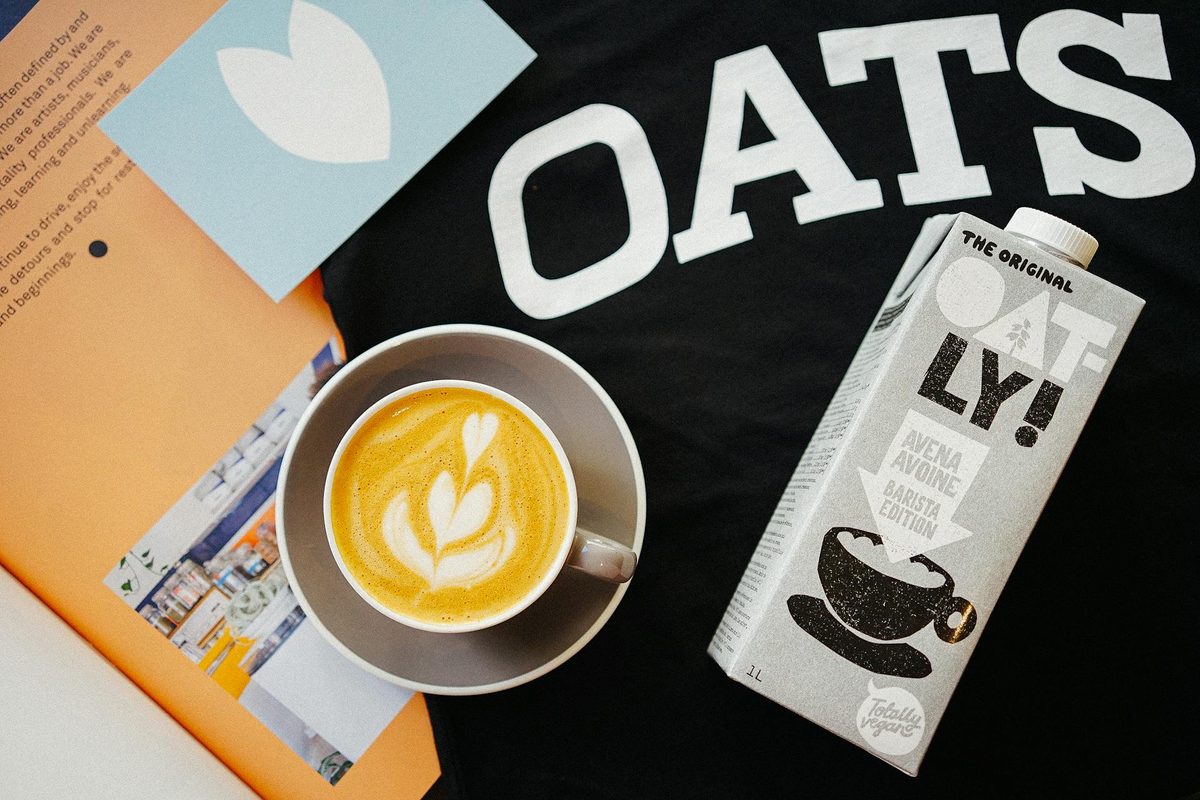
This is part of our Milk Alternatives Complete Guide. See also Oatly vs Califia and Oat Milk vs Almond Milk.
The Key Difference: Fat Content
The most significant difference between Oatly Barista and Oatly Original is fat content. Oatly Barista contains more fat — specifically more rapeseed oil — than the regular version. Per cup, Oatly Barista contains approximately 7g of fat compared to Oatly Original's 5g. This higher fat content is what gives the barista version its superior frothing properties and richer mouthfeel in hot drinks.Calories
As a result of the higher fat content, Oatly Barista is slightly higher in calories — approximately 130–140 calories per cup compared to Oatly Original's 120 calories. The difference is modest but worth noting if you are tracking calories carefully.Protein and Carbohydrates
Both versions contain similar amounts of protein (around 3g per cup) and carbohydrates (around 16g per cup). The macronutrient profile is almost identical except for the fat difference noted above.Why Does the Fat Content Matter for Coffee?
The fat content of plant milk is the primary factor that determines how well it froths and whether it splits when added to hot espresso. Higher-fat plant milks create a more stable foam that holds its structure better in lattes, cappuccinos, and flat whites. Lower-fat milks produce weaker foam that collapses quickly and can sometimes split or curdle when added to acidic espresso.Oatly Barista was specifically formulated for coffee use — the additional fat and a small amount of acidity regulator (dipotassium phosphate) help it perform well at high temperatures and in contact with espresso. For home coffee drinkers using a milk frother or steam wand, Oatly Barista produces noticeably better results than the regular version.
Which Should You Choose?
Choose Oatly Barista if: you primarily use oat milk in coffee — particularly espresso-based drinks like lattes, cappuccinos, and flat whites — and want the best frothing performance.Choose Oatly Original if: you use oat milk on cereal, in smoothies, for cooking, or in non-coffee drinks where frothing performance is not relevant, and want to save a few calories and a small amount of money.
For coffee use, the barista version is worth the marginal extra cost. For everything else, the regular version is perfectly fine. Use our Daily Calorie Needs Calculator to find your daily calorie targets.
References
- USDA FoodData Central — Reference database for nutrient content of foods
- Academy of Nutrition and Dietetics — The Truth About Non-Dairy Beverages — Professional dietitian guidance on plant milks
- Harvard T.H. Chan — Milk — Evidence-based overview of plant milks