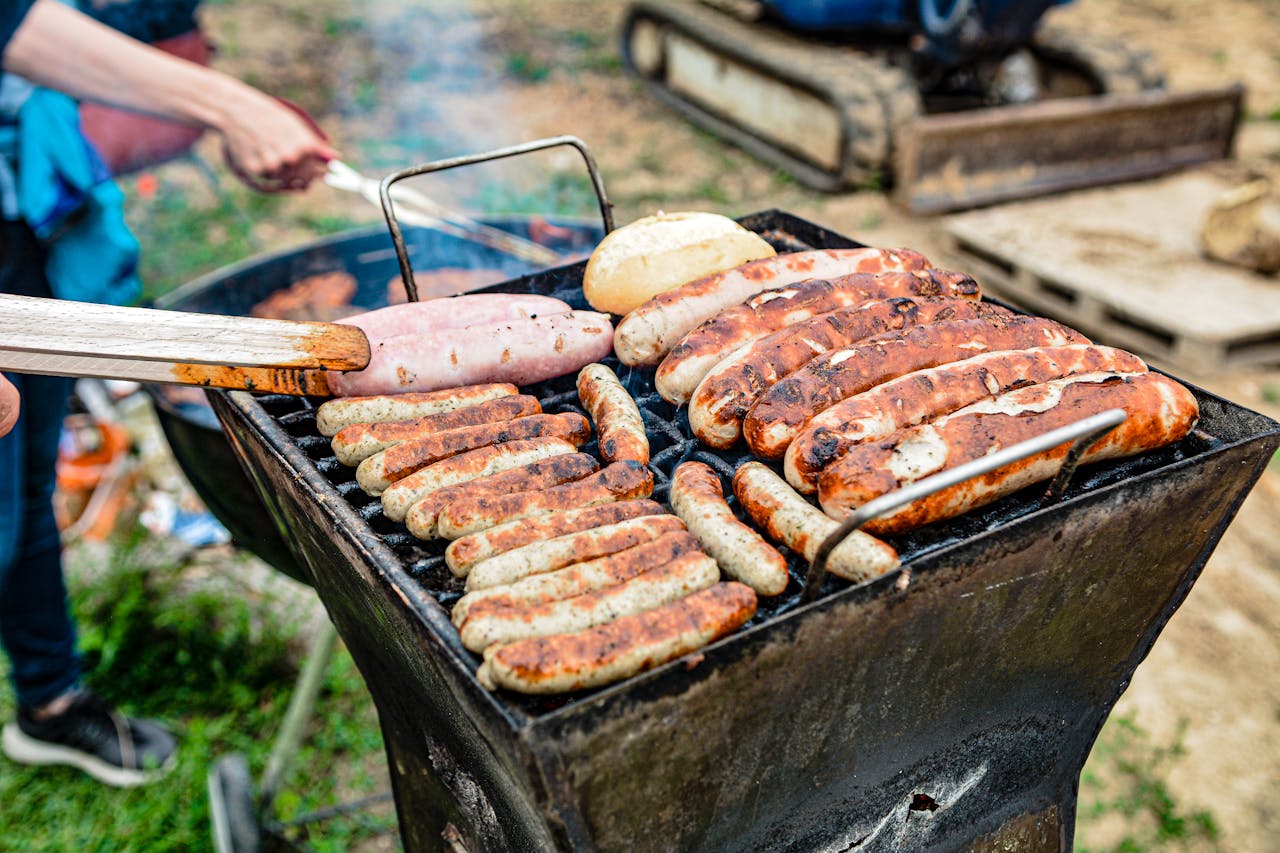
Summer cookouts are one of America's favorite eating occasions — and one of the most calorie-dense. Between burgers, hot dogs, classic sides, and drinks, the average cookout plate easily exceeds 1,500 calories before dessert. Here's what a typical cookout actually costs in exercise terms and how to enjoy summer eating without losing track.
Cookout Plate Breakdown
- Cheeseburger with bun, condiments: ~520 calories
- Hot dog with bun, ketchup, mustard: ~290 calories
- Bratwurst with bun: ~430 calories
- BBQ ribs, 3 ribs: ~540 calories
- BBQ chicken, 1/4 chicken: ~430 calories
- Potato salad, 1/2 cup: ~180 calories
- Macaroni salad, 1/2 cup: ~200 calories
- Coleslaw, 1/2 cup: ~120 calories
- Corn on the cob with butter: ~155 calories
- Baked beans, 1/2 cup: ~180 calories
- Potato chips, 1 oz: ~150 calories
- Watermelon, 1 cup: ~45 calories
- Beer, regular 12 oz: ~150 calories
- Total typical plate (burger + 2 sides + chips + beer): approximately 1,200-1,500 calories
How Long to Burn Off a Typical Cookout Plate (1,400 calories)
For a 155-pound person:
- Walking at 3 mph: approximately 3 hours 47 minutes
- Running at 6 mph: approximately 1 hour 48 minutes
- Cycling at moderate intensity: approximately 2 hours 33 minutes
- Swimming laps: approximately 1 hour 58 minutes
- Lawn games (badminton, frisbee): approximately 4 hours 40 minutes
How Long to Burn Off Two Cheeseburgers (1,040 calories)
For a 155-pound person:
- Walking at 3 mph: approximately 2 hours 49 minutes
- Running at 6 mph: approximately 1 hour 20 minutes
- Cycling at moderate intensity: approximately 1 hour 54 minutes
It's easy to eat two burgers at a cookout — they're smaller than restaurant portions and social settings encourage going back for seconds.
Where Cookout Calories Hide
- The sides add up faster than the main. Three sides (potato salad, chips, beans) can easily contribute 500+ calories — often more than the burger.
- Drinks are often forgotten. 2-3 beers add 300-450 calories. Sweet tea, lemonade, and soda can add 200-400 calories without any eating.
- Standing eating. People typically eat more at standing buffet-style cookouts than at sit-down meals. Lack of plate-size constraint encourages multiple servings.
- Long duration. Cookouts last 3-5 hours. Eating spread out over hours can total 2,000-3,000 calories without feeling like a single big meal.
Lower-Calorie Cookout Strategies
- Skip the bun on one item. A bun is 120-150 calories. Eating a burger or hot dog "naked" cuts calories without losing the main flavor.
- Choose grilled over fried sides. Grilled corn, grilled vegetables, and watermelon are cookout staples at much lower calorie cost than potato salad or chips.
- Pick one indulgence. Burger OR bratwurst, not both. Potato salad OR chips, not both.
- Be intentional about drinks. Two beers instead of four saves 300 calories. Water or unsweetened iced tea adds zero.
- Stay active. Cookout activities (yard games, swimming, walking around) actually burn meaningful calories. An afternoon of yard games can offset 300-500 calories of eating.
Cookout Foods Ranked Best to Worst (per typical portion)
- Best (under 200 calories): Watermelon, grilled vegetables, coleslaw, grilled chicken breast (skinless), shrimp skewers
- Medium (200-400 calories): Hot dog with bun, BBQ chicken, corn on the cob, baked beans
- Higher (400-600 calories): Cheeseburger, bratwurst, BBQ ribs (3 ribs), pulled pork sandwich
- Highest (600+ calories): Loaded burgers (bacon, double patty), full rack of ribs, multiple beers + sides
The Practical Takeaway
A typical cookout plate matches a full restaurant meal in calorie terms, and it's easy to eat well past a single plate at a long social event. The combination of casual buffet-style eating, alcohol, and multi-hour duration makes cookouts one of the most calorically dense recurring events of summer. Awareness of where calories cluster (sides, drinks, second helpings) makes it possible to enjoy cookouts without significant calorie damage.
Track cookout meals with our Food Tracker, calculate exercise needs with our Calories Burned Calculator, or see our complete burn-off guide.
References
- CDC — Nutrition Data and Statistics — National data on social eating patterns and calorie consumption
- Compendium of Physical Activities (Ainsworth et al.) — Authoritative MET values for calorie burn estimates
- Mayo Clinic — Weight loss: 6 strategies for success — Clinical guidance on managing high-calorie social occasions
- NIAAA — Overview of Alcohol Consumption — Federal data on alcohol calories and consumption patterns
- CalorieDetails Calories Burned Calculator — Personalised burn estimates across 70+ exercises