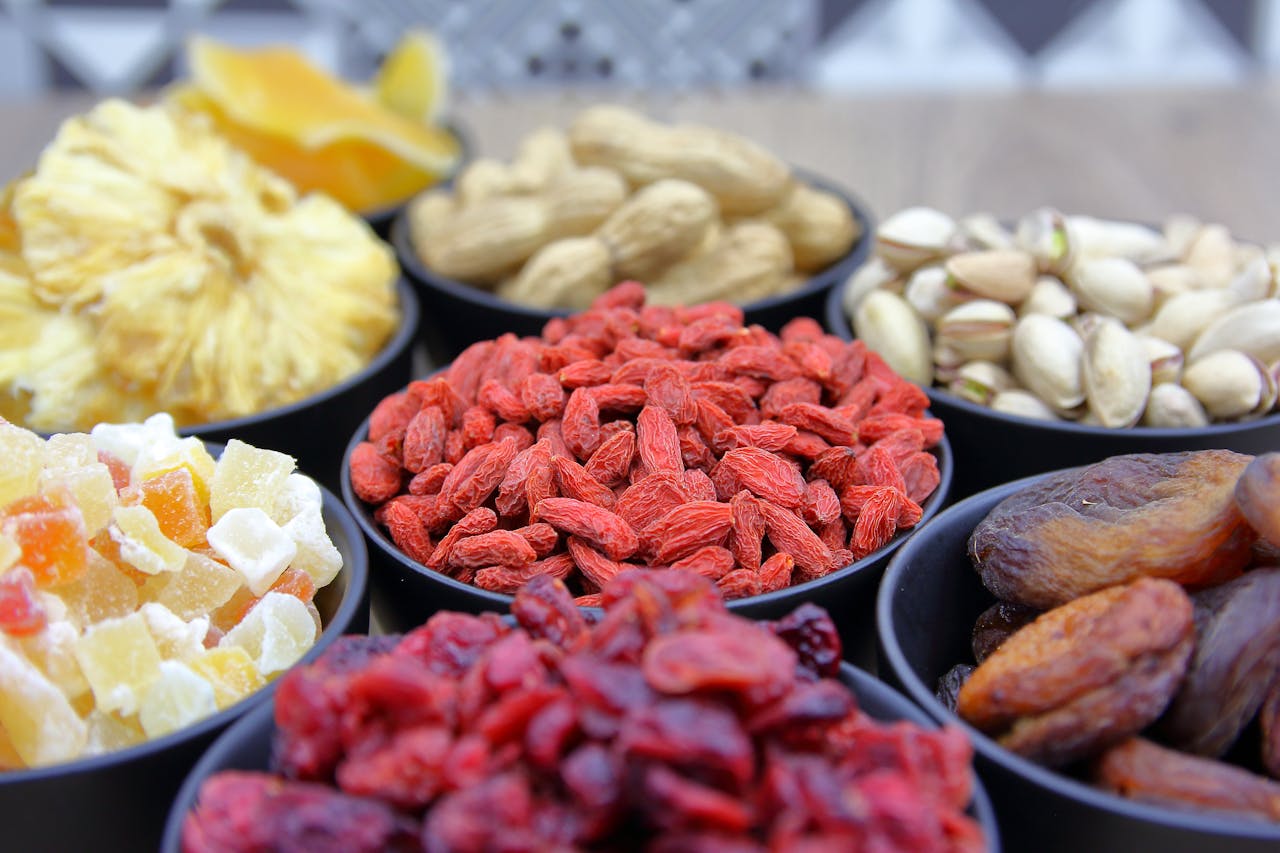
Dried fruit and fresh fruit start as the same food, but the drying process removes almost all of the water content — concentrating the calories, sugar, and nutrients into a much smaller volume. This makes dried fruit significantly higher in calories per gram and very easy to overeat.
Dried vs Fresh Fruit: Calorie Comparison
- Fresh grapes (100g): 67 calories vs Raisins (100g): 299 calories — 4.5x more calories See grape nutrition
- Fresh apricot (100g): 48 calories vs Dried apricots (100g): 241 calories — 5x more calories
- Fresh mango (100g): 60 calories vs Dried mango (100g): 319 calories — 5.3x more calories See mango nutrition
- Fresh cranberries (100g): 46 calories vs Dried cranberries (100g): 308 calories — 6.7x more calories
- Fresh cherries (100g): 63 calories vs Dried cherries (100g): 283 calories — 4.5x more calories See cherry nutrition
- Fresh plum (100g): 46 calories vs Prunes/dried plums (100g): 240 calories — 5.2x more calories
Why Is Dried Fruit So Easy to Overeat?
The portion size problem is the core issue. A quarter cup of raisins (the typical snack serving) contains approximately 120 calories — the same as eating about 2.5 cups of fresh grapes. Most people would feel very full eating 2.5 cups of grapes but barely notice a quarter cup of raisins. The physical volume that triggers satiety is absent in dried fruit.
Does Drying Affect Nutrients?
Drying concentrates most nutrients — a 100g serving of dried apricots provides significantly more iron, potassium, and fibre than 100g of fresh apricots. However, heat-sensitive vitamins like vitamin C and folate are substantially reduced during drying. Dried fruit is a better source of minerals and fibre than vitamins.
Added Sugar in Dried Fruit
Many commercially dried fruits — particularly cranberries, blueberries, and mango — have added sugar to compensate for tartness after drying. This can add 20-50% more calories compared to unsweetened dried fruit. Always check the label. Unsweetened dried fruit is nutritious in small portions — sweetened dried fruit is closer to candy in nutritional terms.
When Is Dried Fruit a Good Choice?
Dried fruit is genuinely useful in small portions for backpacking and hiking (calorie-dense and lightweight), trail mix, and adding to oatmeal or salads. A tablespoon of raisins or dried cranberries in a salad adds flavour and nutrition without significantly impacting calorie intake. Track dried fruit carefully with our Food Tracker — the serving sizes matter enormously. See our complete guide to fruits ranked by calories.
References
- USDA FoodData Central — Reference database for nutrient content of foods
- American Heart Association — Added Sugars — Cardiovascular guidance on sugar intake
- Harvard T.H. Chan — Vegetables and Fruits — Evidence-based overview of fruits and vegetables
- Academy of Nutrition and Dietetics — Fruits — Professional dietitian guidance on fruit consumption
- Dietary Guidelines for Americans 2020-2025 — Federal recommendations on fruit intake