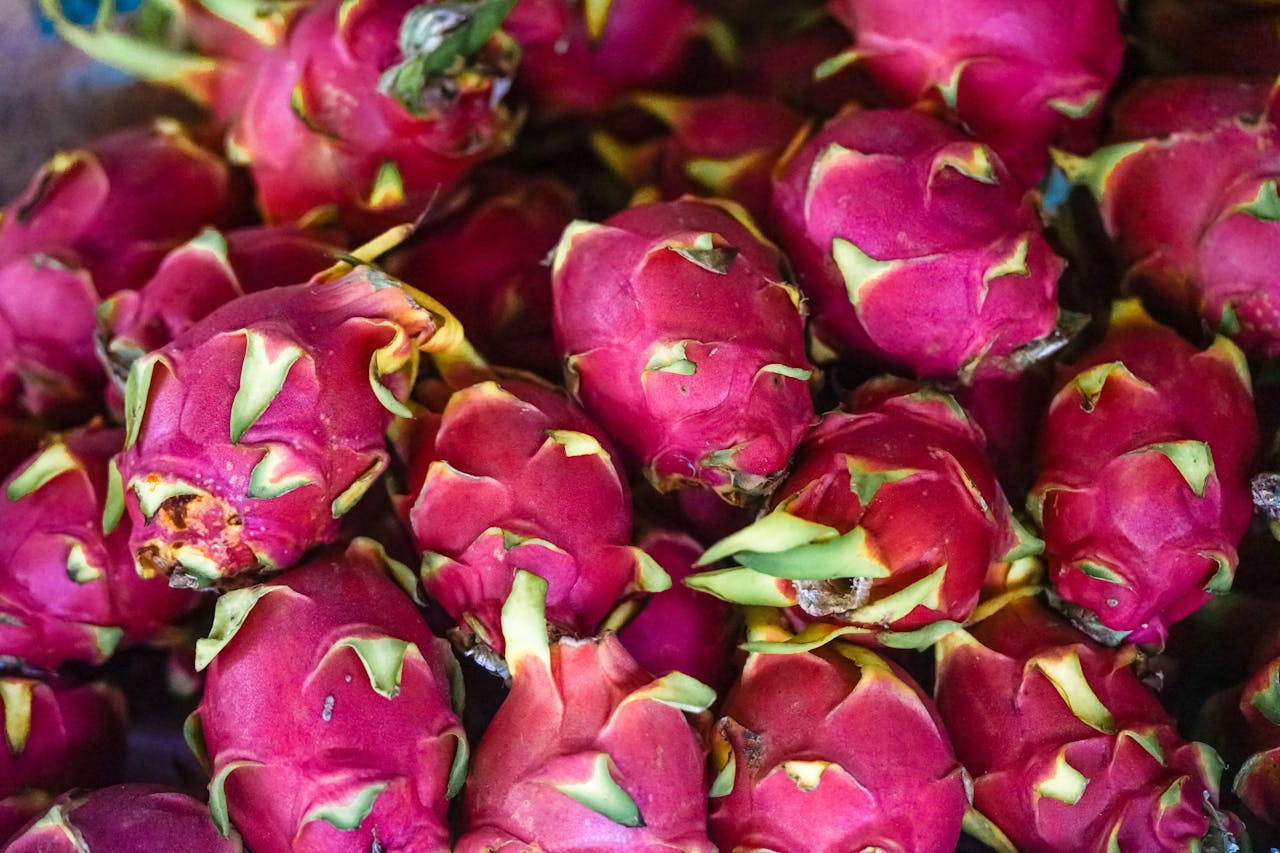
Dragon fruit and kiwi are two of the most visually striking and nutritionally impressive exotic fruits in mainstream supermarkets. Both are moderate in calories, exceptionally high in vitamin C, and provide unique nutritional benefits. Here's the complete comparison.
Dragon Fruit vs Kiwi: Nutrition Comparison (per 100g)
- Calories: Dragon fruit 60 | Kiwi 61 — virtually identical
- Carbohydrates: Dragon fruit 13g | Kiwi 14.7g
- Sugar: Dragon fruit 8.7g | Kiwi 9g — similar
- Fibre: Dragon fruit 2.9g | Kiwi 3g — similar
- Protein: Dragon fruit 1.2g | Kiwi 1.1g — similar
- Vitamin C: Dragon fruit 20.5mg | Kiwi 92.7mg — kiwi has 4.5x more vitamin C
- Vitamin K: Dragon fruit 0 | Kiwi 40.3µg — kiwi is a significant vitamin K source
- Iron: Dragon fruit 1.9mg | Kiwi 0.3mg — dragon fruit has 6x more iron
- Magnesium: Dragon fruit 18mg | Kiwi 17mg — similar
- Potassium: Dragon fruit 272mg | Kiwi 312mg — kiwi slightly higher
See dragon fruit full nutrition | See kiwi full nutrition
Where Kiwi Wins
Kiwi's standout advantage is its extraordinary vitamin C content — 92.7mg per 100g, which is more than an orange. Two kiwis provide approximately 140mg of vitamin C — well above the daily recommended intake of 65-90mg. Kiwi is also a significant source of vitamin K, important for blood clotting and bone health. Kiwi also contains actinidin, a proteolytic enzyme unique to kiwi that improves protein digestion and gut motility.
Where Dragon Fruit Wins
Dragon fruit's standout advantage is its iron content — 1.9mg per 100g versus kiwi's 0.3mg. For a fruit, this is unusually high and makes dragon fruit particularly valuable for people at risk of iron deficiency, including vegetarians and vegans. Dragon fruit also contains betacyanins and betaxanthins — unique antioxidant pigments (the same family that gives beetroot its colour) with anti-inflammatory and prebiotic properties.
Prebiotic Properties
Dragon fruit contains oligosaccharides that function as prebiotics — feeding beneficial bacteria in the gut. Studies have shown dragon fruit consumption increases populations of Lactobacillus and Bifidobacterium in the gut microbiome. Kiwi also has prebiotic properties, and its actinidin enzyme specifically supports protein fermentation in the colon.
Which Should You Choose?
If vitamin C and protein digestion support are your priorities — choose kiwi. If iron, prebiotic fibre, and unique antioxidants are your priorities — choose dragon fruit. Both are excellent fruits with distinct nutritional strengths, and including both regularly provides complementary benefits.
Track both in our Food Tracker. See our complete guide to fruits ranked by calories.
References
- USDA FoodData Central — Reference database for nutrient content of foods
- Harvard T.H. Chan — Vegetables and Fruits — Evidence-based overview of fruits and vegetables
- Academy of Nutrition and Dietetics — Fruits — Professional dietitian guidance on fruit consumption