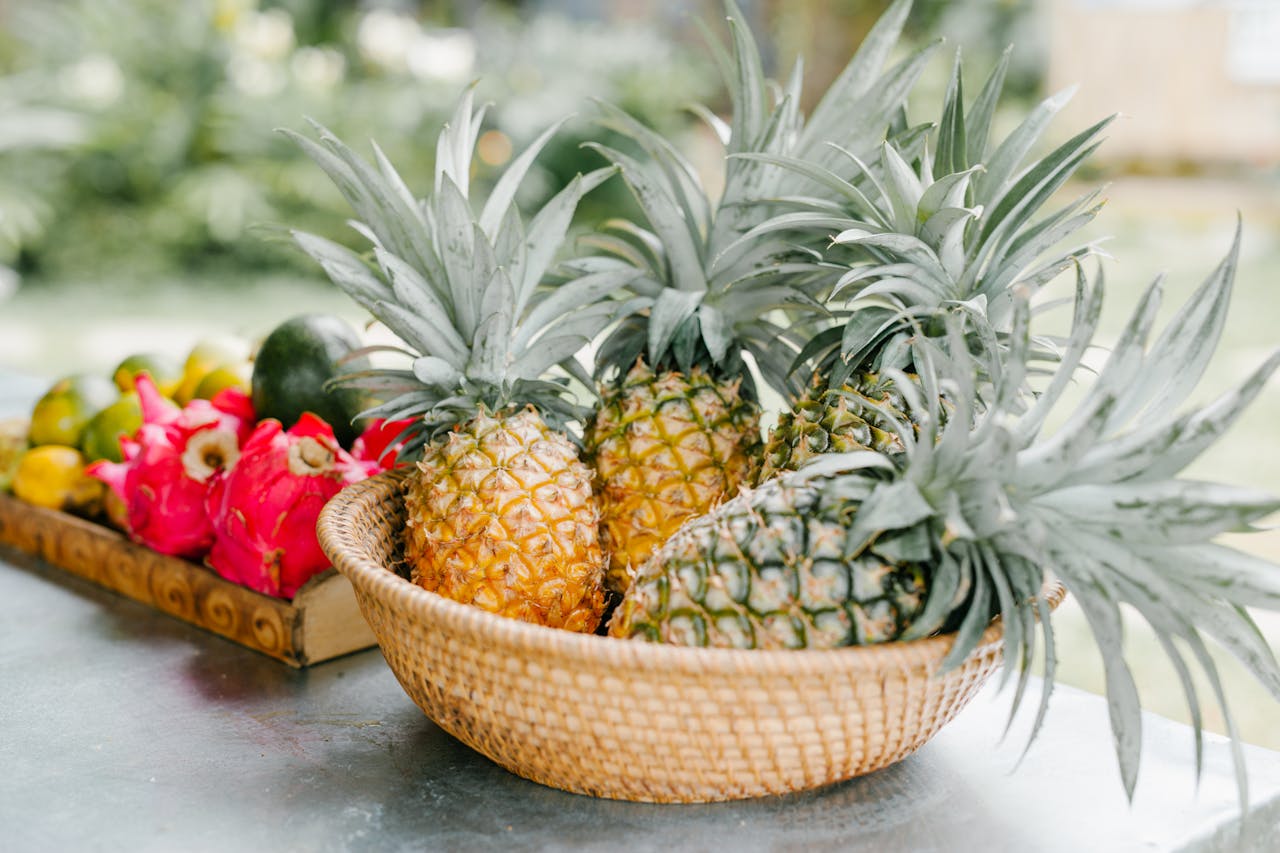
Tropical fruits are some of the most nutritious and flavourful fruits available — and they vary enormously in calorie content. Here are the most popular tropical fruits ranked by calories per 100g.
Tropical Fruits Ranked by Calories (per 100g)
- 1. Fresh coconut meat — 354 calories — The most calorie-dense tropical fruit, high in saturated fat. A 1-ounce serving provides 99 calories.
- 2. Avocado — 160 calories — Technically a tropical fruit, the second most calorie-dense. Rich in monounsaturated fat. See nutrition
- 3. Banana — 89 calories — One of the most calorie-dense common tropical fruits. A medium banana has 105 calories. See nutrition
- 4. Mango — 60 calories — Moderate calorie density, very high in vitamins A and C. A full mango has approximately 201 calories. See nutrition
- 5. Dragon fruit — 60 calories — Moderate calorie density, high in vitamin C and fibre. See nutrition
- 6. Pineapple — 50 calories — Moderate calories, high in manganese and bromelain. A cup of pineapple chunks has approximately 83 calories. See nutrition
- 7. Papaya — 43 calories — Low calorie, exceptionally high in vitamin C and beta-carotene.
- 8. Kiwi — 61 calories — Although technically from New Zealand, kiwi grows in subtropical climates. Very high in vitamin C. See nutrition
- 9. Guava — 68 calories — High in vitamin C (contains 4x more than oranges), moderate calories.
- 10. Passion fruit — 97 calories — Higher calorie tropical fruit, very high in fibre and vitamin C.
Nutritional Highlights of Tropical Fruits
Tropical fruits are generally outstanding sources of vitamin C — mango, pineapple, papaya, guava, and kiwi all provide at least 50% of the daily recommended vitamin C intake per serving. They're also rich in beta-carotene (mango, papaya), potassium (banana, avocado), and digestive enzymes (pineapple's bromelain, papaya's papain).
Dragon Fruit vs Kiwi
Dragon fruit and kiwi are similar in calorie content but have different nutritional strengths. Dragon fruit is higher in vitamin C and has prebiotic fibre that feeds gut bacteria. Kiwi has more potassium and contains actinidin, a unique protein-digesting enzyme. See our dedicated Dragon Fruit vs Kiwi comparison for a full breakdown.
Using Tropical Fruits in Your Diet
Tropical fruits are at their best eaten fresh and ripe. Many are excellent in smoothies — but remember that blending concentrates their sugars and removes the satiety benefit of eating them whole. Track your tropical fruit intake with our Food Tracker. See our complete guide to fruits ranked by calories.
References
- USDA FoodData Central — Reference database for nutrient content of foods
- Harvard T.H. Chan — Vegetables and Fruits — Evidence-based overview of fruits and vegetables
- Academy of Nutrition and Dietetics — Fruits — Professional dietitian guidance on fruit consumption
- CDC — Fruits and Vegetables — Federal guidance on fruit and vegetable consumption