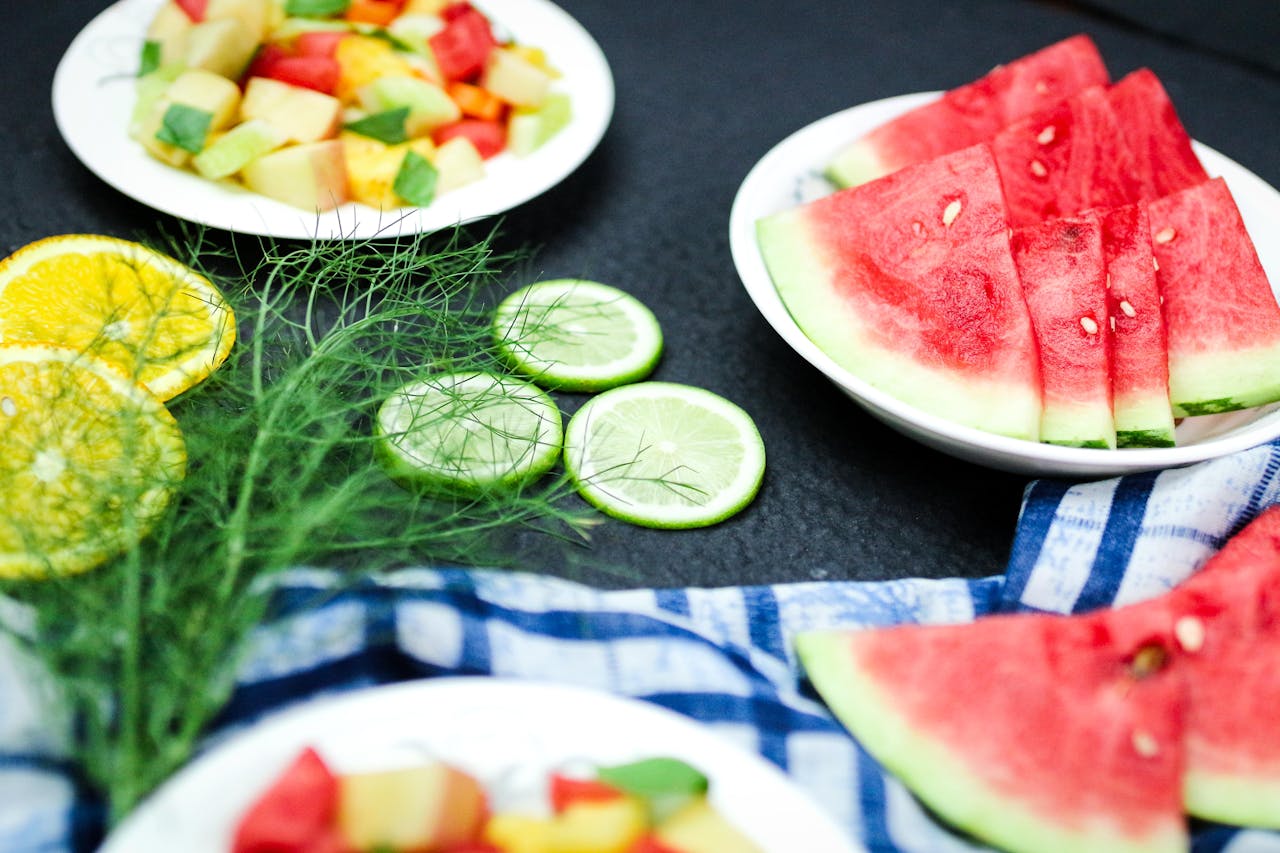
Summer is peak season for some of the most delicious and nutritious fruits of the year. From juicy watermelons to fragrant peaches and fresh berries, summer fruits are generally lower in calories and higher in water content than year-round alternatives. Here are the most popular summer fruits ranked by calories.
Summer Fruits Ranked by Calories (per 100g)
- 1. Watermelon — 30 calories — The quintessential summer fruit and the lowest calorie option. 92% water. See nutrition
- 2. Strawberries — 32 calories — Peak season May-July in most of the US. Exceptional vitamin C content. See nutrition
- 3. Cantaloupe — 34 calories — Summer's best melon, high in beta-carotene. See nutrition
- 4. Raspberries — 52 calories — Peak summer berry, highest fibre of common fruits. See nutrition
- 5. Blackberries — 43 calories — Late summer berry, exceptionally high in antioxidants. See nutrition
- 6. Peach — 39 calories — Peak season June-August. A medium peach has just 58 calories. See nutrition
- 7. Blueberries — 57 calories — Peak season July-August, highest antioxidant content of common berries. See nutrition
- 8. Cherries — 63 calories — Short peak season June-July. Higher in sugar than other summer fruits. See nutrition
- 9. Pineapple — 50 calories — Available year-round but at its best in summer. See nutrition
- 10. Mango — 60 calories — Peak season May-September. Higher in calories and sugar but excellent in vitamins A and C. See nutrition
Why Summer Fruits Are So Low in Calories
Summer fruits are generally lower in calories than autumn and winter fruits (apples, pears, grapes) because they have higher water content. Watermelon is 92% water, cantaloupe is 90%, peaches are 89%, and strawberries are 91%. This water content makes them exceptionally filling relative to their calorie count — ideal for summer weight management.
Buying Summer Fruits at Peak Ripeness
Nutritional content is highest at peak ripeness. For strawberries and raspberries, look for deeply coloured fruits with no white shoulders. Watermelons should have a yellow ground spot indicating field ripeness. Peaches should yield slightly to thumb pressure. Eating seasonal summer fruits at peak ripeness maximises both nutritional value and flavour.
Track your summer fruit intake with our Food Tracker. See our complete guide to fruits ranked by calories.
References
- USDA FoodData Central — Reference database for nutrient content of foods
- Harvard T.H. Chan — Vegetables and Fruits — Evidence-based overview of fruits and vegetables
- Academy of Nutrition and Dietetics — Fruits — Professional dietitian guidance on fruit consumption
- CDC — Fruits and Vegetables — Federal guidance on fruit and vegetable consumption