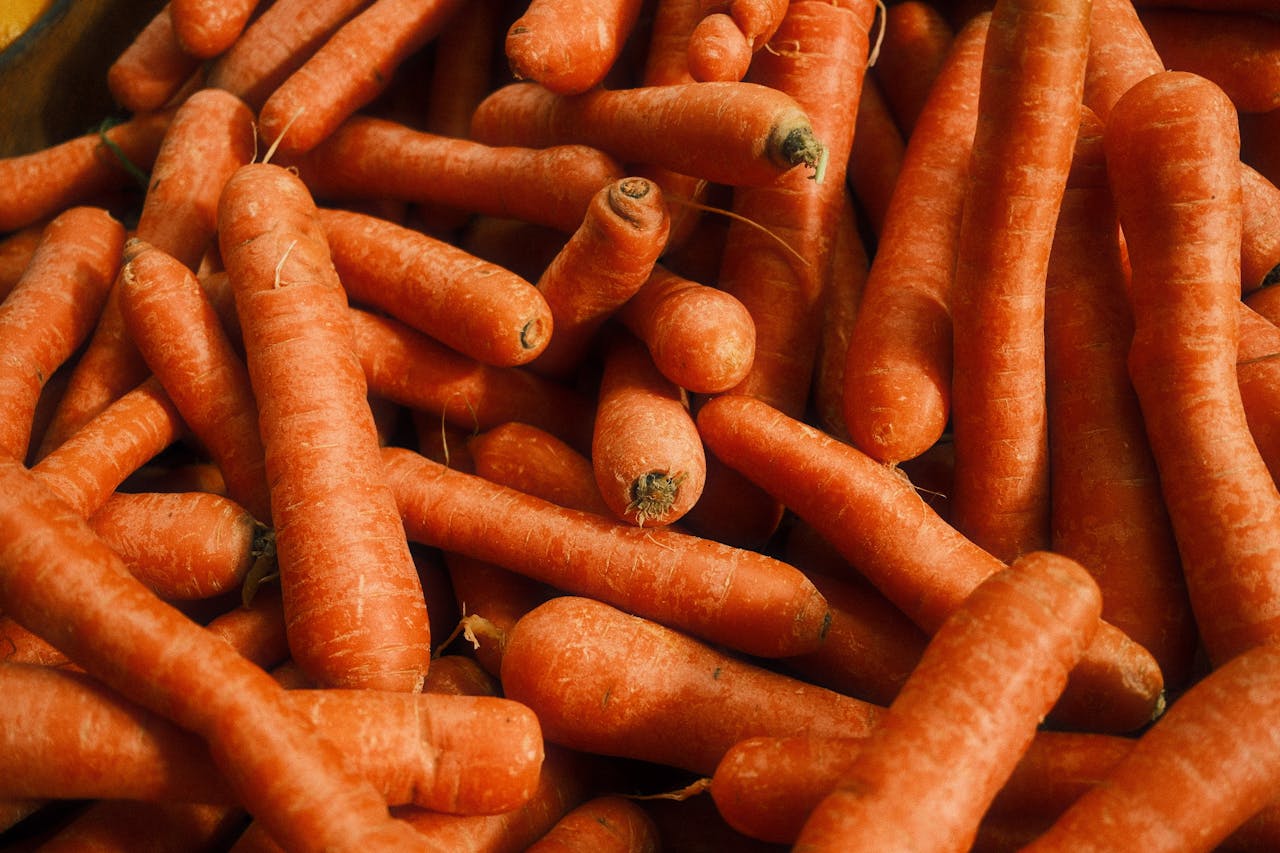
The recommended daily intake is 700mcg for adult women and 900mcg for adult men, expressed as retinol activity equivalents (RAE). Deficiency is rare in developed countries but can cause night blindness and increased susceptibility to infection. On the flip side, excessive intake of preformed vitamin A from supplements can be toxic, so food sources are generally the safer route.
Sweet Potato
Sweet potato is one of the richest plant-based sources of beta-carotene available. A medium baked sweet potato provides around 1,400mcg RAE — well over the full daily recommended intake in a single serving. The bright orange colour is the beta-carotene at work, and consuming it with a small amount of fat (olive oil, avocado, or a drizzle of butter) improves absorption since vitamin A is fat-soluble. Full nutrition details for sweet potato here.
Kale
Kale is another outstanding plant-based source of vitamin A via beta-carotene. A cup of cooked kale provides around 885mcg RAE, along with vitamin K, vitamin C, and calcium. The beta-carotene in kale is better absorbed from cooked kale than raw, as heat breaks down cell walls and releases more of the carotenoid. Full details for kale here.
Spinach
Spinach is rich in beta-carotene and provides around 573mcg RAE per cup of cooked spinach. Like kale, light cooking improves beta-carotene bioavailability. Spinach also provides lutein and zeaxanthin — carotenoids specifically associated with eye health and the prevention of age-related macular degeneration, which is particularly relevant given vitamin A's well-known role in vision. Full nutrition breakdown for spinach here.
Broccoli
While not as high as the leafy greens on this list, broccoli still contributes meaningfully to vitamin A intake via beta-carotene. A cup of cooked broccoli provides around 120mcg RAE alongside its exceptional vitamin C, fibre, and sulforaphane content. It's one of the most nutritionally well-rounded vegetables available. Full details for broccoli here.
Salmon
Among animal sources, salmon provides a meaningful amount of preformed vitamin A (retinol) — around 59mcg RAE per 3-ounce serving. Since retinol is directly usable by the body without conversion, even smaller amounts from animal sources can make a significant contribution to daily intake. Combined with its omega-3s, B12, and vitamin D, salmon remains one of the most nutritionally complete foods you can eat. Full breakdown for salmon here.
Eggs
Eggs provide preformed vitamin A (retinol) concentrated in the yolk — around 75mcg RAE per large egg. This is one of the main reasons nutritionists consistently recommend eating whole eggs rather than just whites. The yolk also contains lutein and zeaxanthin, which complement vitamin A's role in eye health. Full nutrition facts for eggs here.
Greek Yogurt
Dairy products including Greek yogurt contribute small but useful amounts of preformed vitamin A. A cup of plain Greek yogurt provides around 28mcg RAE, alongside its protein, calcium, and B12 content. Full-fat varieties contain more vitamin A than low-fat versions since the vitamin is fat-soluble. Full nutrition details for Greek yogurt here.
A Note on Fat-Soluble Vitamins
Because vitamin A is fat-soluble, it's stored in the body (mainly in the liver) rather than excreted daily. This means deficiency takes longer to develop than with water-soluble vitamins, but it also means that excessive supplementation can lead to toxicity over time. Getting vitamin A primarily from food sources rather than high-dose supplements is the safest approach for most people.
For more on fat-soluble vitamins, check out our post on vitamin D-rich foods. And use our Food Tracker to keep track of your daily vitamin intake. For a complete overview of all essential nutrients in one place, see our Complete Guide to Essential Nutrients.
References
- NIH Office of Dietary Supplements — Vitamin A — Authoritative reference on vitamin A
- Harvard T.H. Chan — Vitamin A — Evidence-based overview
- Mayo Clinic — Vitamin A — Clinical guidance
- USDA FoodData Central — Reference database for nutrient content of foods