The Numbers Don't Lie
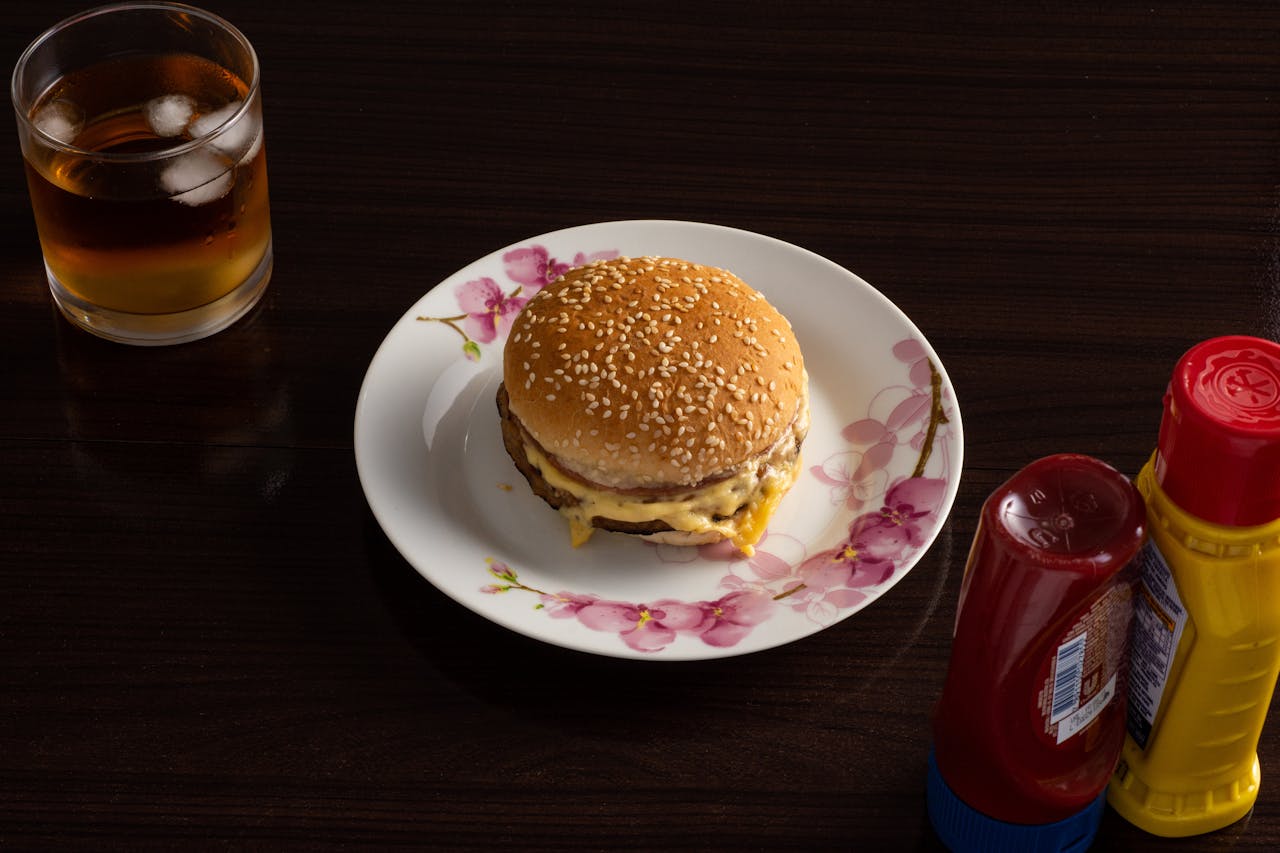
Let's start with a concrete example. The McDonald's Big Mac contains 563 calories. A McDonald's Crispy Chicken Bacon Ranch Salad with a full packet of Newman's Own Ranch Dressing (170 calories) comes in at approximately 640-700 calories. The salad is more calories than the burger.
At Wendy's, the Cobb Salad is 670 calories before dressing. Add a full packet of Ranch Dressing at 200 calories and you're at 870 calories — more than a Dave's Double at 860 calories.
The Three Reasons Salads Accumulate Calories
1. Dressing is often the largest single calorie contributor
A single packet of creamy dressing contains 150-310 calories. Applied to a salad that would otherwise be 300-400 calories, the dressing alone can increase the total by 50-80%. Most people pour the whole packet without thinking about it, because dressing doesn't feel like a high-calorie addition in the way that a burger patty or fries do.
2. Crispy chicken adds 100-150 calories of fat and breading
Salads with crispy chicken instead of grilled carry a significant hidden calorie cost. The breading absorbs oil during frying, adding calories that aren't visible in the final product. A grilled chicken salad and a crispy chicken salad look almost identical — but the calorie difference can be substantial.
3. Toppings are more calorie-dense than they appear
Candied pecans, blue cheese crumbles, shredded cheddar, bacon bits, croutons — each of these individually might seem like a minor addition, but combined on a single salad they can add 300-500 calories. A burger's calorie content is visible and understood. A salad's calorie content feels hidden because each individual topping seems modest.
The Psychology of the "Healthy Halo"
Research has consistently shown that people underestimate the calorie content of foods they perceive as healthy and overestimate the calorie content of foods they perceive as unhealthy. This is called the "healthy halo" effect. Labelling a food as "healthy" or "natural" causes people to assume it is low in calories even when it isn't.
Fast food salads benefit from exactly this bias. Because they are associated with health, dieting, and vegetable consumption, people assume they are lower in calories than comparable burger options — even when the actual numbers say otherwise.
How to Actually Order a Lower-Calorie Salad
The solution is straightforward once you understand the problem. Always choose grilled over crispy chicken. Always ask for dressing on the side and use half. Be aware of high-calorie toppings like candied nuts, full cheese portions, and bacon. A grilled chicken salad with a vinaigrette-style dressing will almost always be fewer calories than any burger on the menu. The same salad with crispy chicken and a full packet of creamy dressing may not be.
For the full fast food salad picture, see our Complete Guide to Fast Food Salads. Use our Food Tracker to log your full meal and see the real numbers.
References
- Academy of Nutrition and Dietetics — How to Build a Better Salad — Dietitian guidance on salad composition
- Academy of Nutrition and Dietetics — Fast Food Options — Professional dietitian guidance on fast food choices
- McDonald's — Official Nutrition Calculator — Source for McDonald's menu nutrition data
- Wendy's — Nutrition Information — Source for Wendy's menu nutrition data
- Dietary Guidelines for Americans 2020-2025 — Federal dietary recommendations
- American Heart Association — How much sodium should I eat per day? — Context for sodium-heavy fast food
- American Heart Association — Saturated Fats — Context for high-fat fast food choices