The recommended daily intake is 75mg for adult women and 90mg for adult men, with smokers needing an additional 35mg due to increased oxidative stress. Unlike some nutrients, vitamin C is water-soluble and not stored in the body in large amounts, so it's important to get a consistent supply through your diet.
Oranges and Citrus Fruits
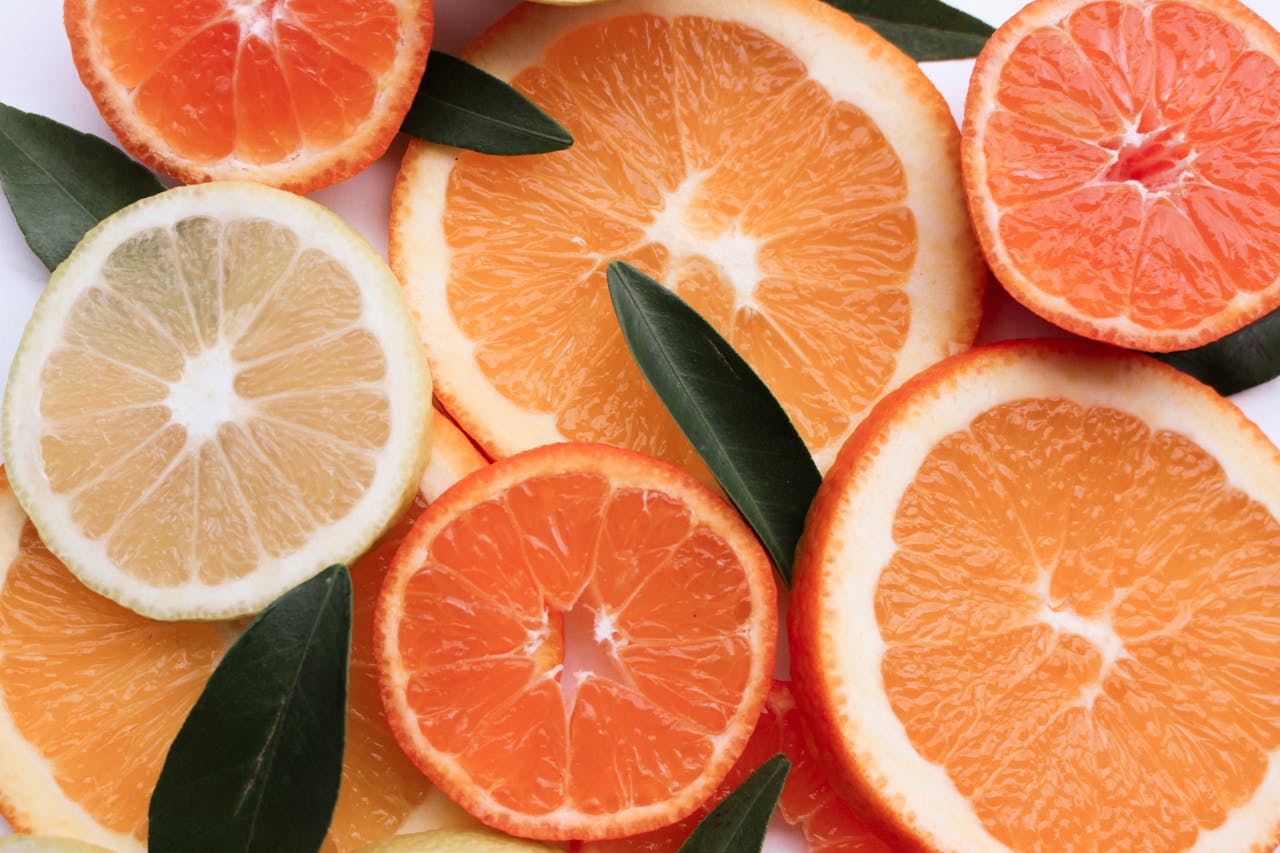
Oranges are the poster child for vitamin C for good reason. A medium orange provides around 70mg of vitamin C — close to the full daily recommended intake in a single piece of fruit. Other citrus fruits like grapefruit, lemons, and limes are also solid sources. Beyond vitamin C, citrus fruits provide fibre, folate, and a range of flavonoid antioxidants. Fresh is always better than juice since whole fruit retains more fibre and often more vitamin C. See full nutrition details for oranges here.
Broccoli
Broccoli is one of the most vitamin C-rich vegetables available, with a cup of raw broccoli providing around 81mg — slightly more than an orange. Cooked broccoli loses some vitamin C due to heat sensitivity, so lightly steaming or eating it raw maximises the content. It's also rich in vitamin K, folate, fibre, and sulforaphane. One of the most nutritionally complete vegetables you can eat. Full nutrition breakdown for broccoli here.
Kale
Kale is another dark leafy green that delivers an impressive amount of vitamin C. A cup of raw kale contains around 80mg of vitamin C, along with vitamin K, vitamin A, calcium, and antioxidants. It's one of the more nutrient-dense foods available per calorie, which is why it earned its "superfood" reputation. Add it to salads, blend it into smoothies, or bake it into chips for a satisfying crunch. See the full nutrition profile for kale here.
Spinach
Spinach provides a meaningful contribution of vitamin C — around 28mg per cup raw — alongside iron, magnesium, folate, and potassium. While it's not as high in vitamin C as some other vegetables on this list, the combination of vitamin C with iron in spinach is particularly useful since vitamin C enhances non-heme iron absorption. Eating spinach with a squeeze of lemon juice or alongside other vitamin C-rich foods amplifies the iron benefit. Full details for spinach here.
Sweet Potato
Sweet potato isn't typically the first food people think of for vitamin C, but a medium baked sweet potato provides around 22mg alongside its substantial vitamin A, fibre, and potassium content. It's a versatile, satisfying whole food that contributes to multiple nutrient targets at once. See nutrition facts for sweet potato here.
Avocado
Avocado contributes a modest but meaningful amount of vitamin C — around 10mg per 100g — alongside healthy fats, potassium, and fibre. Since vitamin C aids in collagen production, combining avocado with higher-vitamin-C foods in the same meal is a smart approach. See the full nutrition breakdown for avocado here.
Edamame
Edamame provides around 9mg of vitamin C per cup alongside its well-known protein and fibre content. It's not the highest source on this list but contributes to overall daily intake as part of a varied diet. Full nutrition details for edamame here.
Salmon
Salmon provides a small amount of vitamin C but is worth mentioning in this context because of its synergy with the nutrient — the protein in salmon supports collagen synthesis alongside vitamin C, making them a natural dietary pairing. Pair salmon with a side of broccoli or kale and you're covering both bases effectively. See the nutrition profile for salmon here.
Does Cooking Affect Vitamin C?
Yes, and this is worth knowing. Vitamin C is heat-sensitive and water-soluble, which means boiling vegetables can destroy a significant portion of their vitamin C content. Steaming, roasting, or eating foods raw retains more of the vitamin. If you do boil vegetables, using the cooking water in soups or sauces recaptures some of the lost vitamin C.
For more on immunity-supporting nutrients, check out our posts on vitamin D-rich foods and zinc-rich foods. And use our food search to look up the vitamin C content of any food in our database. For a complete overview of all essential nutrients in one place, see our Complete Guide to Essential Nutrients.
References
- NIH Office of Dietary Supplements — Vitamin C — Authoritative reference on vitamin C
- Harvard T.H. Chan — Vitamin C — Evidence-based overview
- Mayo Clinic — Vitamin C — Clinical guidance
- USDA FoodData Central — Reference database for nutrient content of foods