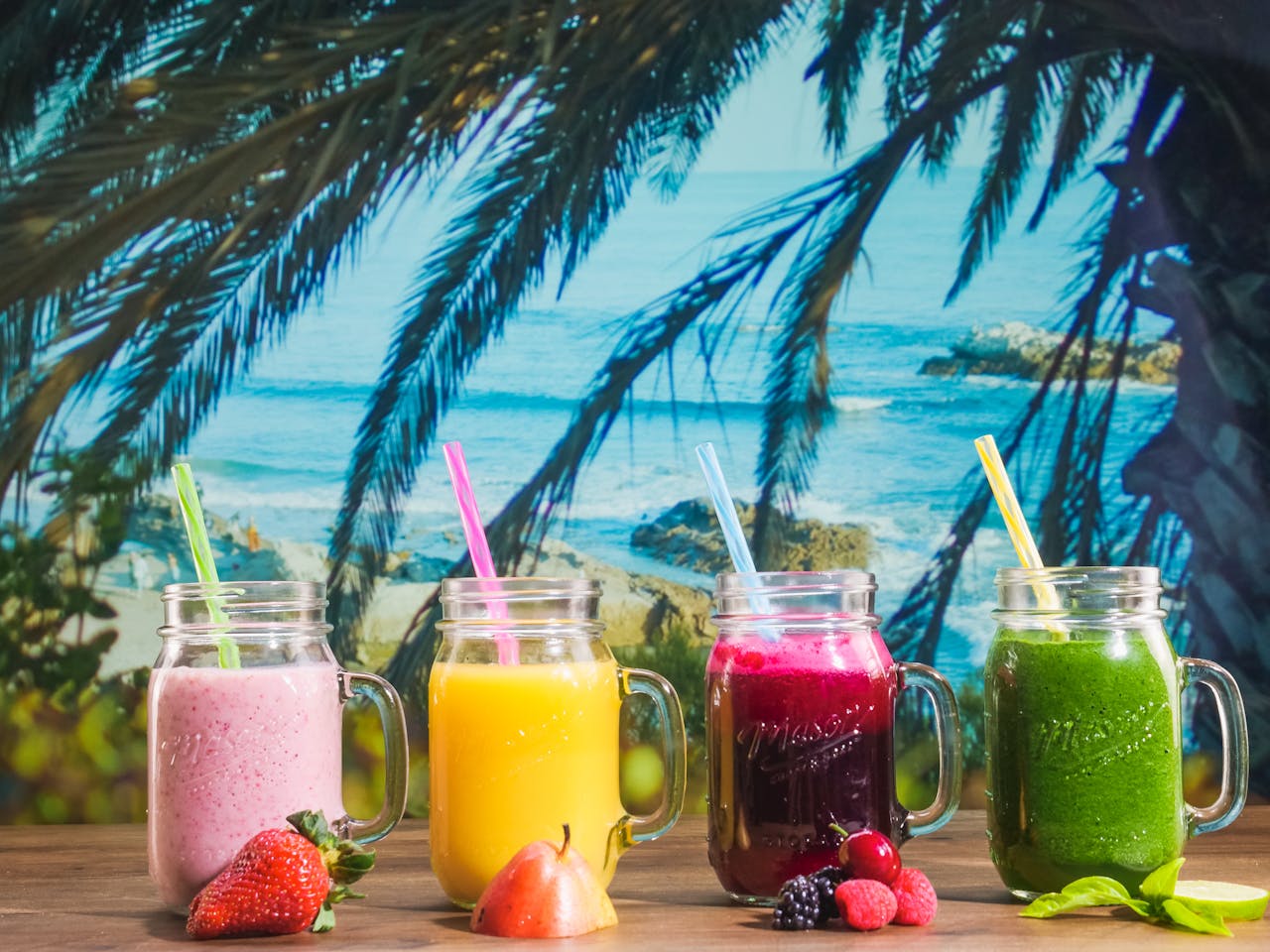
Smoothies are widely marketed as a health food, but a poorly constructed smoothie can easily contain 400-600 calories — more than a fast food burger. Here's how smoothies compare to eating whole fruit, and how to build a smoothie that's genuinely healthy.
Smoothie vs Whole Fruit: Calorie Comparison
Typical Fruit Smoothie (banana + mango + orange juice)
- 1 banana (105 calories) See banana nutrition
- 1 cup mango chunks (99 calories) See mango nutrition
- 1 cup orange juice (112 calories)
- Total: ~316 calories
Eating Those Fruits Whole
- 1 banana: 105 calories
- 1 cup mango chunks: 99 calories
- 1 medium orange: 62 calories See orange nutrition
- Total: ~266 calories — but far more filling
Why Smoothies Are Less Filling Than Whole Fruit
Blending breaks down the cell walls of fruit, releasing sugars and making them more rapidly absorbed. It also removes the mechanical effort of chewing, which contributes to satiety signalling. Research consistently shows that liquid calories are less satiating than solid calories — people who drink a smoothie eat more at the next meal compared to those who ate the equivalent fruit whole.
The Hidden Calorie Problem in Commercial Smoothies
Commercial smoothies from chains like Jamba Juice, Smoothie King, and Tropical Smoothie Cafe frequently contain 400-900 calories per large serving — driven by added syrups, juice bases, frozen yogurt, and oversized portions. A Jamba Juice large Mango-a-Go-Go can contain over 500 calories.
How to Build a Lower-Calorie Smoothie
- Use water or unsweetened almond milk as the base instead of juice (saves 80-100 calories)
- Add spinach or kale — zero noticeable flavour impact, adds nutrients
- Use frozen berries as the primary fruit — low calorie, high fibre Strawberries | Raspberries
- Limit banana to half a banana for creaminess without excess calories
- Skip added sweeteners, honey, or protein powders with added sugar
Track your smoothie calories accurately by logging each ingredient in our Food Tracker. See our complete guide to fruits ranked by calories.
References
- American Heart Association — Smoothies and Juicing — Cardiovascular perspective on smoothies and juicing
- USDA FoodData Central — Reference database for nutrient content of foods
- Harvard T.H. Chan — Fruit Juice — Evidence-based perspective on fruit juice vs whole fruit
- Academy of Nutrition and Dietetics — Fruits — Professional dietitian guidance on fruit consumption
- Harvard T.H. Chan — Fiber — Evidence-based fiber overview