Diabetes management often leads people to avoid fruit entirely — but this is unnecessarily restrictive. Most fruits can be part of a diabetic diet when chosen carefully and eaten in appropriate portions. Here are the best low-sugar fruits for diabetics, ranked by sugar content and glycaemic impact.
Best Low Sugar Fruits for Diabetics
1. Berries — Best Overall Choice
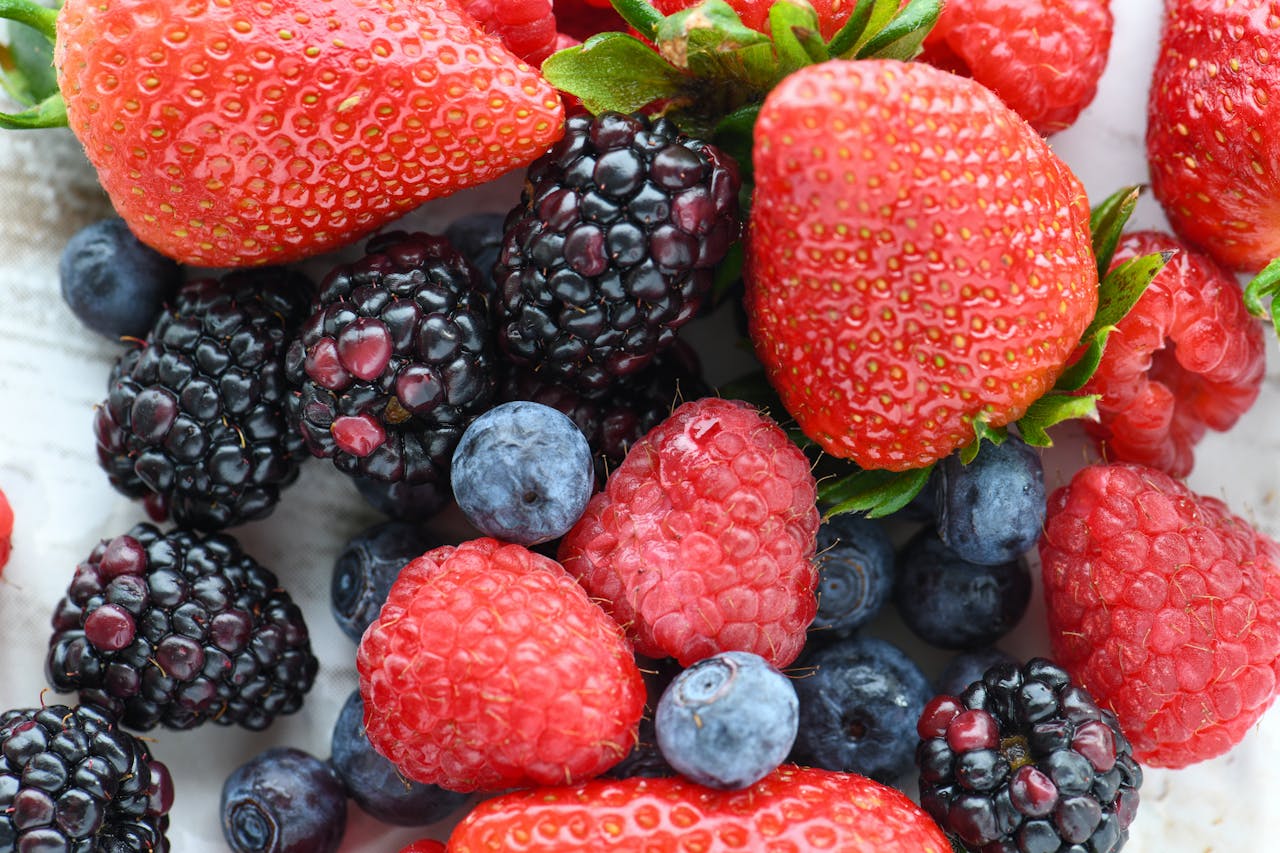
Berries are the best fruits for diabetics across every metric — low in sugar, high in fibre, low glycaemic index, and exceptionally high in antioxidants that research suggests may specifically benefit insulin sensitivity.
- Raspberries: 4.4g sugar per 100g, GI ~32 See nutrition
- Blackberries: 4.9g sugar per 100g, GI ~25 See nutrition
- Strawberries: 4.9g sugar per 100g, GI ~40 See nutrition
- Blueberries: 10g sugar per 100g, GI ~53 See nutrition
2. Avocado
With only 0.7g of sugar per 100g and a GI of approximately 15, avocado is the lowest-sugar fruit available. Its healthy fats also slow the absorption of any carbohydrates eaten alongside it. See avocado nutrition
3. Grapefruit
Grapefruit has a relatively low GI of approximately 25 and contains naringenin, a flavonoid that research suggests may improve insulin sensitivity. Half a grapefruit contains only 13g of carbohydrates. See grapefruit nutrition
4. Apple
Despite containing 10.4g of sugar per 100g, apples have a low GI of approximately 38 due to their high pectin fibre content which slows glucose absorption significantly. A small apple is a well-tolerated choice for most diabetics. See apple nutrition
5. Peach
Peaches have a low GI of approximately 42 and a moderate sugar content of 8.4g per 100g. A medium peach at 58 calories is a well-tolerated fruit for blood sugar management. See peach nutrition
Fruits to Limit with Diabetes
- Bananas (ripe): High GI (~62), high sugar (17g per 100g) — underripe bananas are better See nutrition
- Grapes: High sugar (16g per 100g), easy to overconsume See nutrition
- Mango: High in fructose (14.8g per 100g) See nutrition
- Watermelon: High GI (~72) despite low sugar per 100g See nutrition
Portion Size Matters Most
Even high-sugar fruits can be enjoyed in small portions. The key is understanding the total carbohydrate load per serving and monitoring blood sugar response. Track your fruit intake and total carbohydrates with our Food Tracker. See our complete guide to fruits ranked by calories.
References
- American Diabetes Association — Eating Fruit — Authoritative guidance on fruit in diabetic diets
- Mayo Clinic — Diabetes diet: Create your healthy-eating plan — Clinical guidance on diabetic diet planning
- USDA FoodData Central — Reference database for nutrient content of foods
- Harvard T.H. Chan — Vegetables and Fruits — Evidence-based overview of fruits and vegetables
- American Heart Association — Added Sugars — Cardiovascular guidance on sugar intake
- Academy of Nutrition and Dietetics — Fruits — Professional dietitian guidance on fruit consumption